Skip to content
  • About
  • Podcast
  • Engage
    • Meme Prize
    • Worldbuilding Course
    • AI Pathways
    • Hyper-Entities
  • About
  • Podcast
  • Engage
    • Meme Prize
    • Worldbuilding Course
    • AI Pathways
    • Hyper-Entities
  • Worldbuilding course
  • Guest lectures
  • Toolbox
  • World gallery
  • World submission
  • Worldbuilding course
  • Guest lectures
  • Toolbox
  • World gallery
  • World submission
  • About
  • Podcast
  • Engage
    • Meme Prize
    • Worldbuilding Course
    • AI Pathways
    • Hyper-Entities
  • About
  • Podcast
  • Engage
    • Meme Prize
    • Worldbuilding Course
    • AI Pathways
    • Hyper-Entities
  • Worldbuilding course
  • Guest lectures
  • Toolbox
  • World gallery
  • World submission
  • Worldbuilding course
  • Guest lectures
  • Toolbox
  • World gallery
  • World submission
X-twitter Bookmark

The Silent Panakos

Creator Information

Name:

Dylan Roberts

Role:

Persistent Poster

Social Media/Website:

Visit

World Summary

Vision

By 2035 the antibiotic pipeline the world had quietly let die is running again. AI designs novel antimicrobials faster than resistance can evolve, and a global stewardship body keeps those drugs working by hoarding its own success, releasing each new cure slowly so the bacteria never catch up.

Transformative technology

Generative antimicrobial design AI

Proposes new molecules and phage combinations targeted at named resistance mechanisms, scoring candidates by whether bacteria could evolve around them without sacrificing fitness. A search that took chemists a decade now produces validated leads in months.

What kind of AI exists in your world?

Bounded, governed Tool AI pointed at one hard problem. Proposes and screens candidate molecules and phage cocktails; ranks them by efficacy and by evolvability (how easily resistance could arise); explains its reasoning. Designs but does not decide: no candidate touches a human without wet-lab validation, toxicology clearance, and regulatory approval. Core models are open-weight and audited, built by a public-health consortium.

New or Reformed Institution

The Antibiotic Stewardship Trust (AST) — funds antimicrobial discovery and governs use as a shared, depletable resource. Pays for cures via pull prizes decoupled from sales volume; tiers global prescribing into first-line, second-line, and reserve; withholds the most powerful new drugs from general use until resistance defeats everything else; mandates open publication of all funded molecular structures. Forbidden from letting any funder market a reserved drug for volume.

Transformed Sector

Antibiotics
Before: antibiotics were a broken market. The more responsibly a drug was used, the less it sold, so companies left the field. By the late 2020s the pipeline was nearly empty.
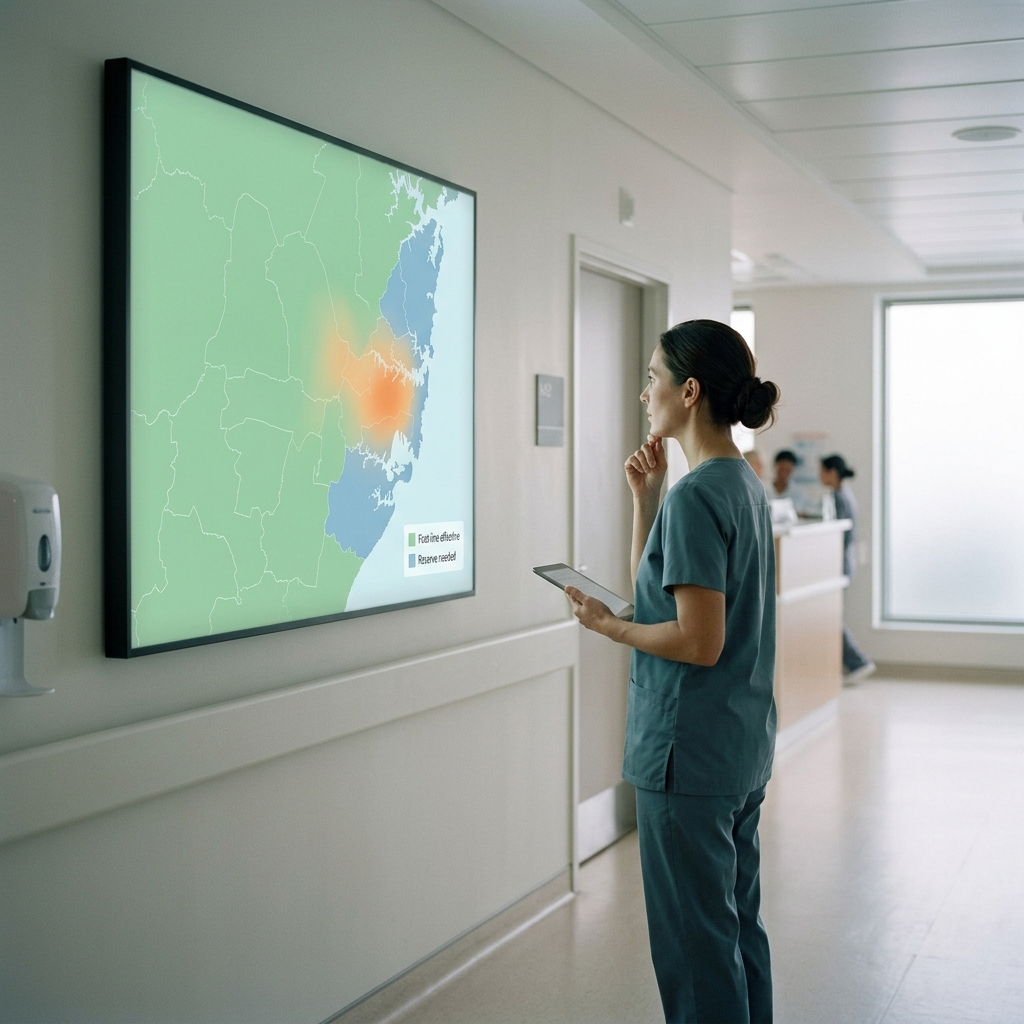
After: discovery and stewardship are a single, funded, continuous public system. The Resistance Map is a live regional forecast of which bacteria are gaining ground, and lives on the wall of every ward. These maps emobdy an international shift: antibiotics stopped being a product and became a commons to be tended.


A Major Crisis Overcome

The 2032 Routine-Surgery Scare: a pan-resistant Klebsiella strain moved into surgical wards across three countries. Elective surgery stopped. The first instinct, throwing every reserve drug at the strain, would have taught bacteria to beat those too. Instead the panic forced what experts had proposed since Alphafold 4: governments funded the pull prize and ceded prescribing authority to a public body, the AST. The first AST-funded antimicrobial was immediately placed in reserve.

A project by the Foresight Institute

Copyright © 2026. All rights reserved.

ABOUT

Contact & Press

Library

Archive

Privacy Policy

Youtube Spotify Podcast X-twitter