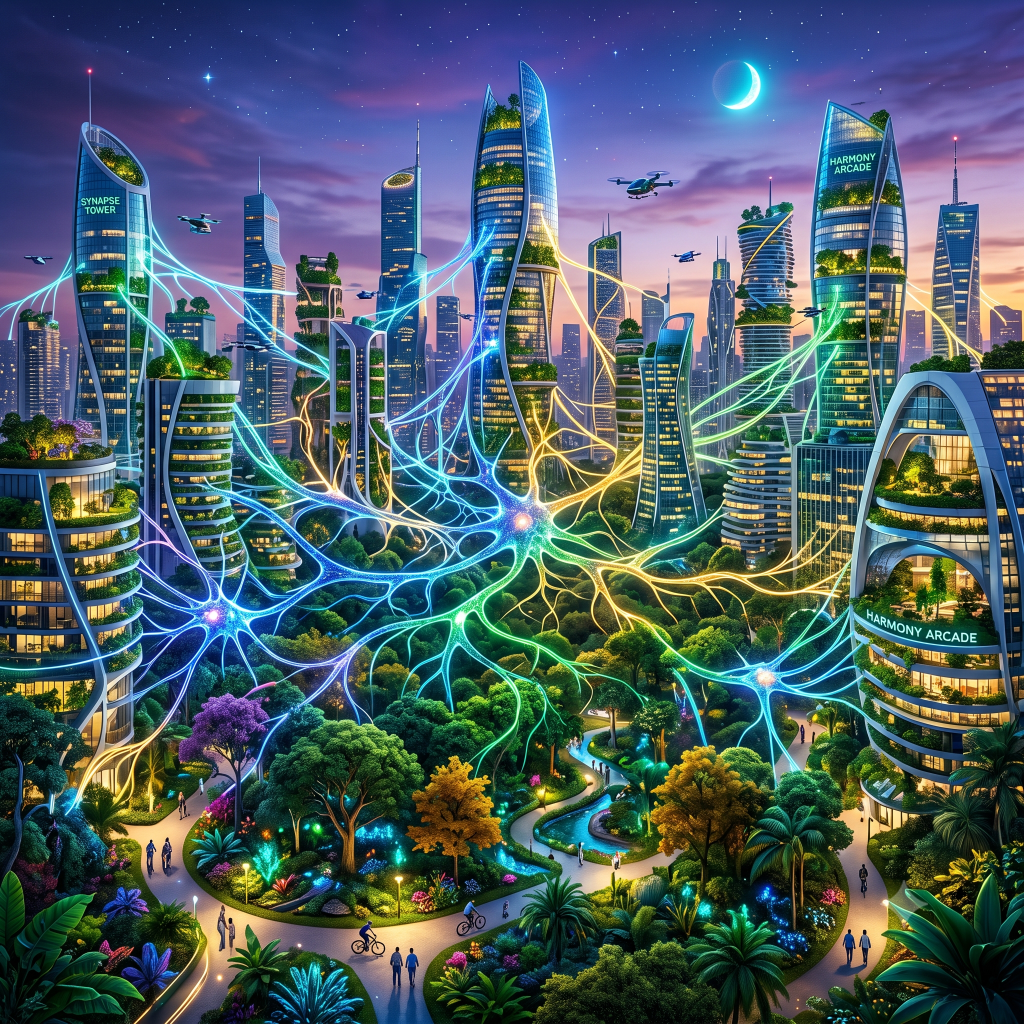
By 2035, humanity thrives in a symbiotic partnership with AI ecosystems that regenerate the planet and expand human creativity – hopeful because progress is measured not in GDP, but in restored forests, shared knowledge, and collective wellbeing
Transformative technology
Bio‑Neural Interfaces
They solve the challenge of human‑machine disconnect. In 2035, people interact with AI through thought‑driven interfaces, enabling seamless creativity, accessibility for all abilities, and radically faster problem‑solving.
What kind of AI exists in your world?
AI exists as Community‑Grown Autonomous AI, cultivated like digital ecosystems by local cooperatives. It’s not owned by corporations but nurtured like public gardens, evolving responsibly under human‑set ethical boundaries.
New or Reformed Institution
Earth Memory Bank is a global institution preserving ecological, cultural, and digital knowledge. Its purpose: ensure every community can access humanity’s collective memory to guide decisions and prevent repeating past mistakes
Transformed Sector
Healthcare, Governance
Governance has shifted from rigid nation‑state bureaucracies to fluid, participatory “civic networks” powered by AI. Citizens co‑create policies in real time through transparent simulations, and decisions are tested against ecological and social impact models before implementation. This transformation matters because it dissolves mistrust in politics, ensures accountability, and empowers people everywhere to directly shape the systems that affect their lives.
A Major Crisis Overcome
The world faced a collapse of trust in digital systems and ecological tipping points. By decentralizing AI stewardship and embedding regenerative technologies, societies overcame misinformation and climate despair, choosing resilience over fragmentation