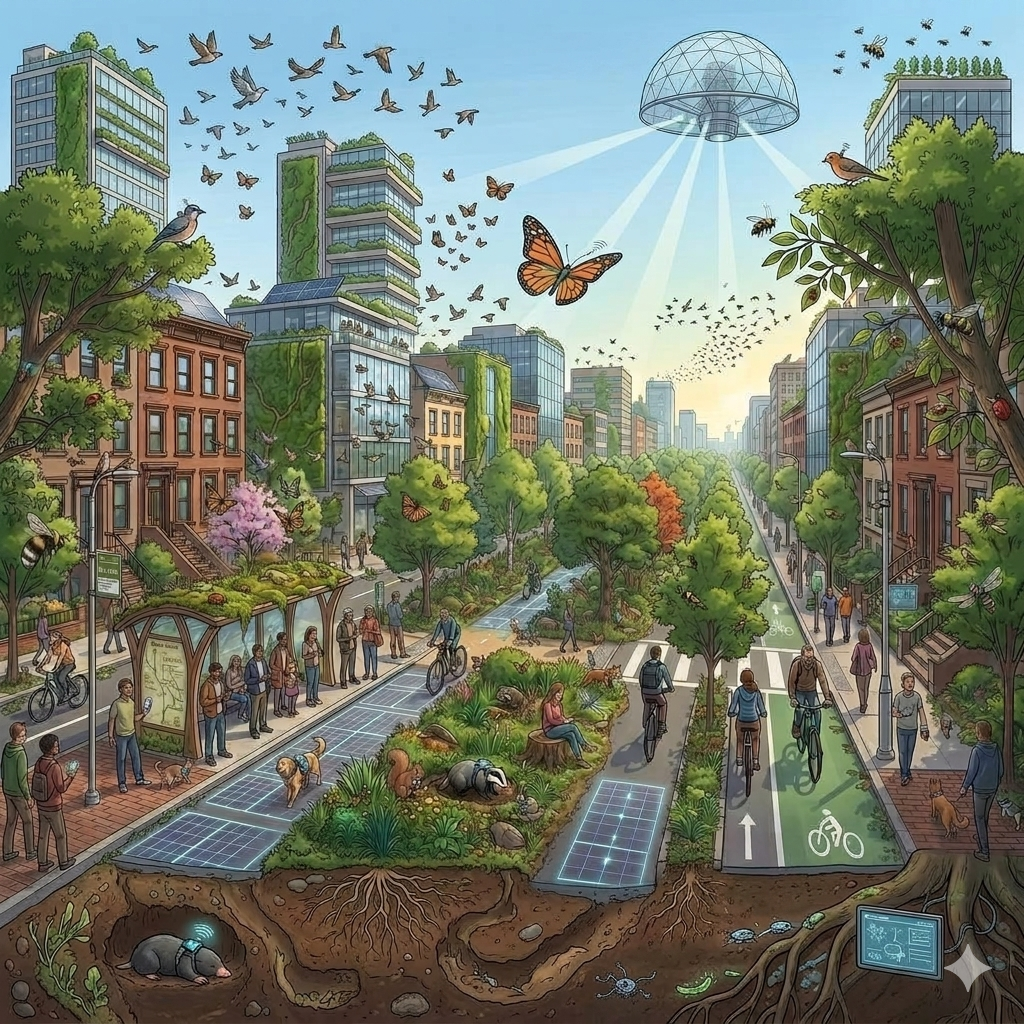
Rich birdsong filters through open windows of homes covered in native plants, and the hum of insect highways lines every footpath. Nature is no longer pushed to the fringes of human society, instead
human society has adapted to nature. Humans and animals share cities, politics, and knowledge, united by AI that finally lets us listen. Anthropocentrism has been dismantled, and in its place: a world where all forms of intelligence are respected, nature leads, and abundance replaces scarcity.
Transformative technology
InterSpeak
This system decodes animal communication across every sensory channel: sound, scent, electrical signals and more. Animals can fully express pain, preference and consent, awakening humans to the moral crisis of animal suffering. Factory farming is abolished and animals hold political representation.
What kind of AI exists in your world?
AI is deeply ecological and relational rather than extractive. It operates primarily as a listener and translator — processing vast, multi-sensory biological data to reveal the intelligence already present in nature. It is governed by multi-species ethics councils, and its outputs are used to reduce harm rather than maximise productivity. Like all technology, AI is embedded in the ecosystem, with green energy and water recycling. Nothing operates without an ecological impact assessment.
New or Reformed Institution
The Interspecies Assembly: a political body at local, national and international levels where animals, supported by AI translation, hold advisory and voting rights on legislation affecting ecosystems, land,
agriculture and climate. It replaces anthropocentric governance, ensuring no decision is made without accounting for its impact on non-human life. The knowledge shared leads humans to be more openminded toward one another, recognising that systems that oppress animals also oppress humans.
Transformed Sector
Food & Agriculture
Factory farming has been abolished, both through legislation developed according to the Interspecies Assembly and a cultural shift driven by animals’ newfound ability to express suffering in terms humans could no longer ignore or abstract away. Food systems are now built around regenerative, multi-species land stewardship, with AI monitoring soil health and biodiversity. Plant-based food, guided by animal wisdom on land use, has made the old model both morally and economically obsolete.
A Major Crisis Overcome
The Sixth Mass Extinction. In this hopeful world, the anthropocene is averted through InterSpeak, novel building materials and ecosystem monitoring technology. This allowed scientists, urban
planners, and governments to monitor even the smallest creatures’ needs in real time, rerouting infrastructure, rewilding cities, and giving endangered species a direct voice in the decisions affecting
their survival. Animals themselves became partners in conservation rather than passive subjects of it.