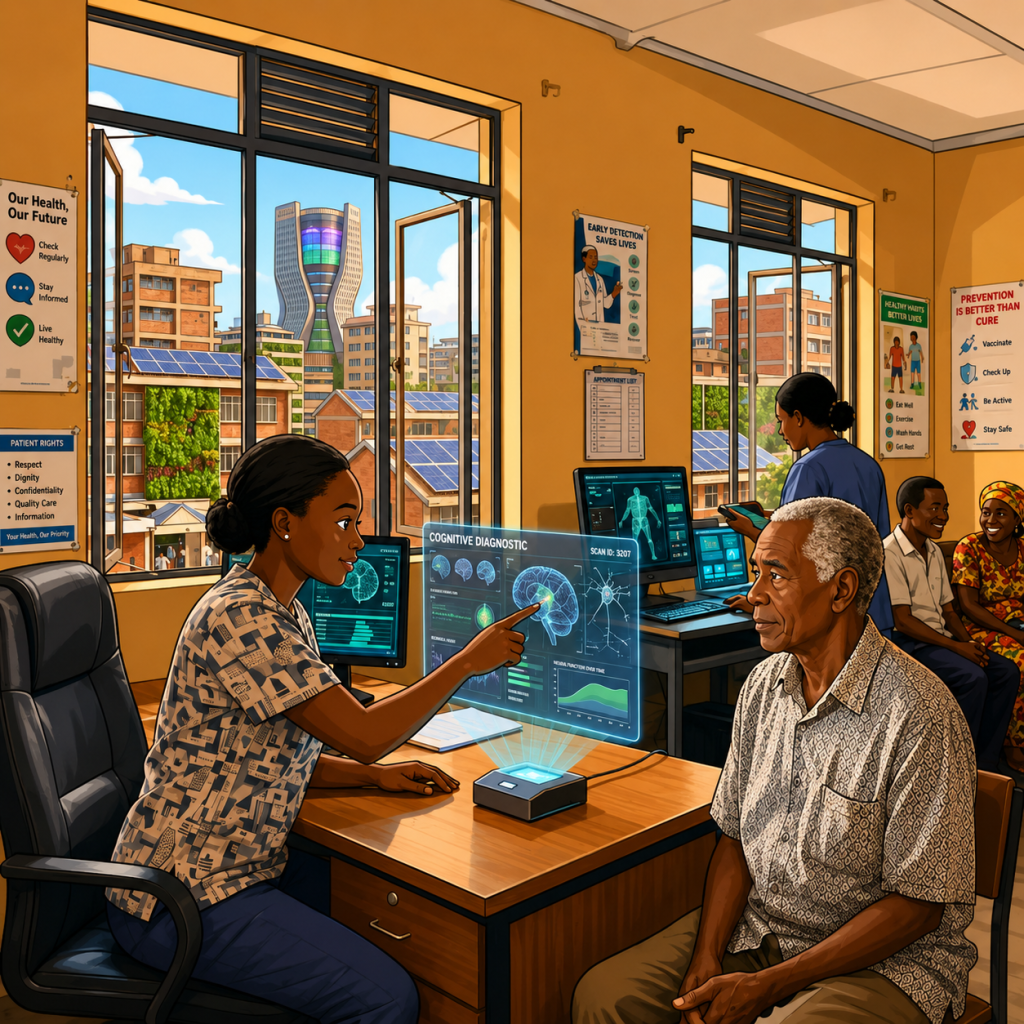
By 2035, AI, biotech, and neurotech have merged into predictive healthcare. Instead of treating illness, systems monitor biological and neurological signals to catch problems years early. Lifespans and health have improved dramatically, but wealthy regions access gene therapy, regenerative medicine, and cognitive enhancement, while poorer communities get only basic AI-assisted care. Disease suffering has dropped sharply, yet inequality remains unsolved.
Transformative technology
The Bio-Neural Twin
A Bio-Neural Twin is a continuously updated AI model of an individual person’s genome, immune system, organs, neural activity, and medical history. Every citizen can choose to maintain a digital biological replica that predicts future health outcomes.
What kind of AI exists in your world?
The dominant AI architecture is known as Guardian AI. Guardian AIs are highly capable, domain-specific, continuously audited, and human-supervised. Rather than one superintelligent system controlling everything, society relies on networks of specialized AIs. Examples include Medical Guardian AI, Agricultural Guardian AI, Climate Guardian AI, and Infrastructure Guardian AI.
In healthcare, AI acts as a “co-pilot” because critical decisions still require licensed human approval.
New or Reformed Institution
Created in 2032, GBAC is the world’s first institution with authority over cross-border biotechnology and neurotechnology deployment. It operates like a hybrid of the WTO and an international court. Member states submit national biotech governance frameworks, and GBAC settles disputes when a technology approved in one jurisdiction is banned or restricted in another. GBAC maintains a database of national frameworks that is transparent, publicly searchable, and linked to national health data.
Transformed Sector
Healthcare
Healthcare becomes the most transformed sector in human history. Most healthcare interactions occur before illness develops. AI continuously monitors blood biomarkers, sleep patterns, brain activity, and environmental exposure. There is now precision gene therapy as treatments target specific genetic pathways. Many hereditary diseases become manageable or preventable. AI-guided tissue engineering enables lab-grown organs, cartilage regeneration, retinal replacement, neural tissue repair
A Major Crisis Overcome
In spring 2034, an AI monitoring neurological health across Europe detected a subtle pattern of early cognitive decline that no human could see. The cause, a protein contaminant in a widely distributed probiotic supplement, was identified in just 11 days, preventing a far larger crisis. Though poor international coordination caused early confusion, the event, later called The Cascade, cemented AI health surveillance, strengthened GBAC’s authority, and exposed biotechnology’s hidden risks.