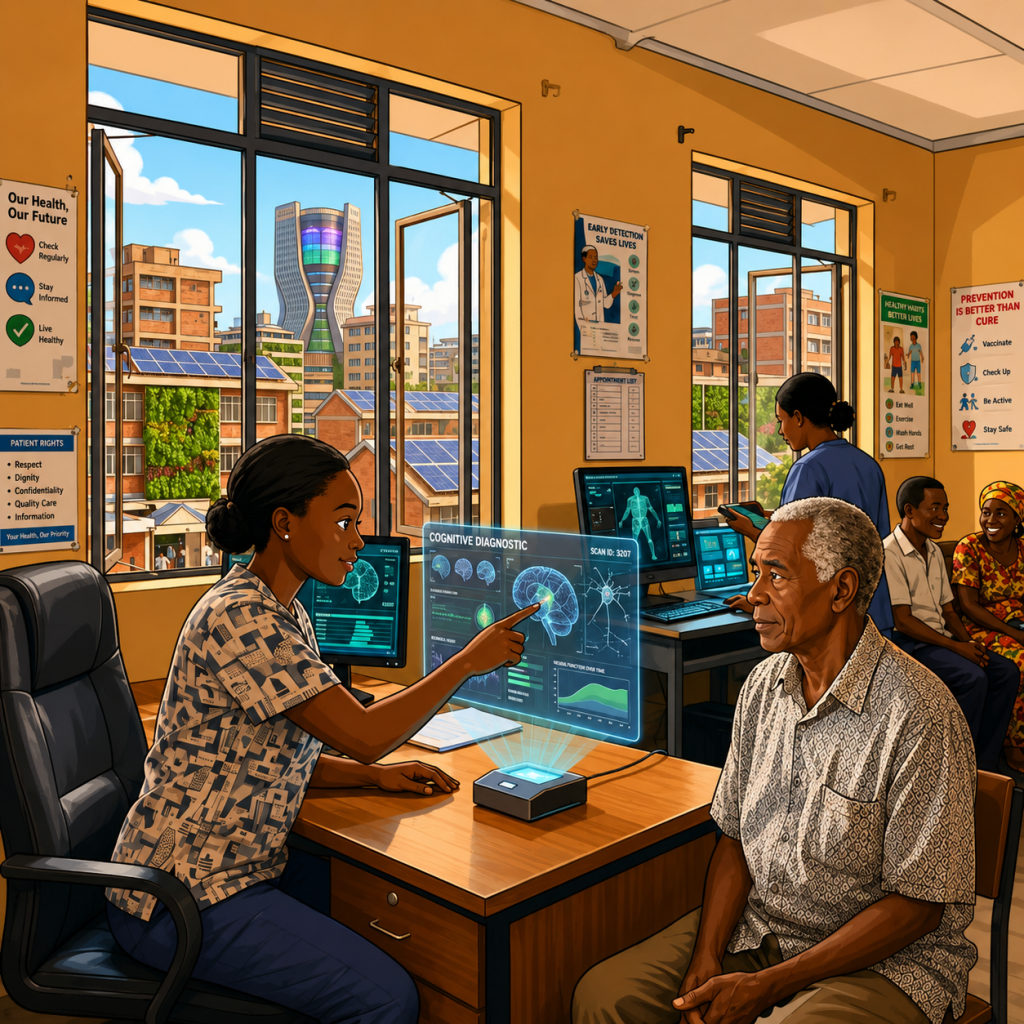
The year is 2035. Humanity has not solved inequality, but it has managed to reduce human suffering due to diseases.
The integration of AI, biotechnology, and neurotechnology has created a healthcare system that focuses more on the prevention of diseases than their cure. Intelligent AI systems analyze biological and neurological signals constantly and predict any problems that may arise in the years to come.
Transformative technology
The Bio-Neural Twin
A Bio-Neural Twin is a continuously updated AI model of a person’s genome, immune system, organs, and medical history. It detects mutations years before disease strikes, simulates millions of biological outcomes, and recommends personalized treatment.
What kind of AI exists in your world?
By 2035, AI is powerful but controlled. After the labor disruptions and misinformation crises of the late 2020s, society pivoted to Guardian AIs, which are networks of specialized, audited, human-supervised systems. Medical, Agricultural, Climate, and Infrastructure Guardian AIs handle their domains with precision, but no single system controls everything. In healthcare, AI serves as a co-pilot, but critical decisions still require licensed human approval.
New or Reformed Institution
GBAC (Global Bioethics Arbitration Council), established 2032, is the world’s first institution with binding authority over cross-border biotech and neurotech disputes. A hybrid of the WTO and international court, it resolves conflicts between jurisdictions and maintains a public, searchable database of national frameworks. GBAC is imperfect and currently entangled in a scandal over illegal neurocognitive enhancements among its decision-makers, but it’s the only institution of its kind.
Transformed Sector
Healthcare
Healthcare is 2035’s most transformed sector. Hospitals have become prevention centers because AI continuously monitors biomarkers, sleep, brain activity, and environmental exposure before illness develops. Precision gene therapy now targets specific genetic pathways, making many hereditary diseases manageable or preventable. Meanwhile, AI-guided regenerative medicine enables lab-grown organs, cartilage regeneration, retinal replacement, and neural tissue repair.
A Major Crisis Overcome
In February 2033, a cross-border surveillance AI flagged an impossible cluster of early-onset cognitive decline among unrelated demographics across Amsterdam, Lyon, and Hamburg. The causative agent, a protein contaminant in a widely distributed probiotic, was identified in 11 days. Pre-AI, that took years. The crisis exposed some inefficiencies but was contained with zero fatalities. It made AI health surveillance politically unkillable and gave GBAC its teeth.