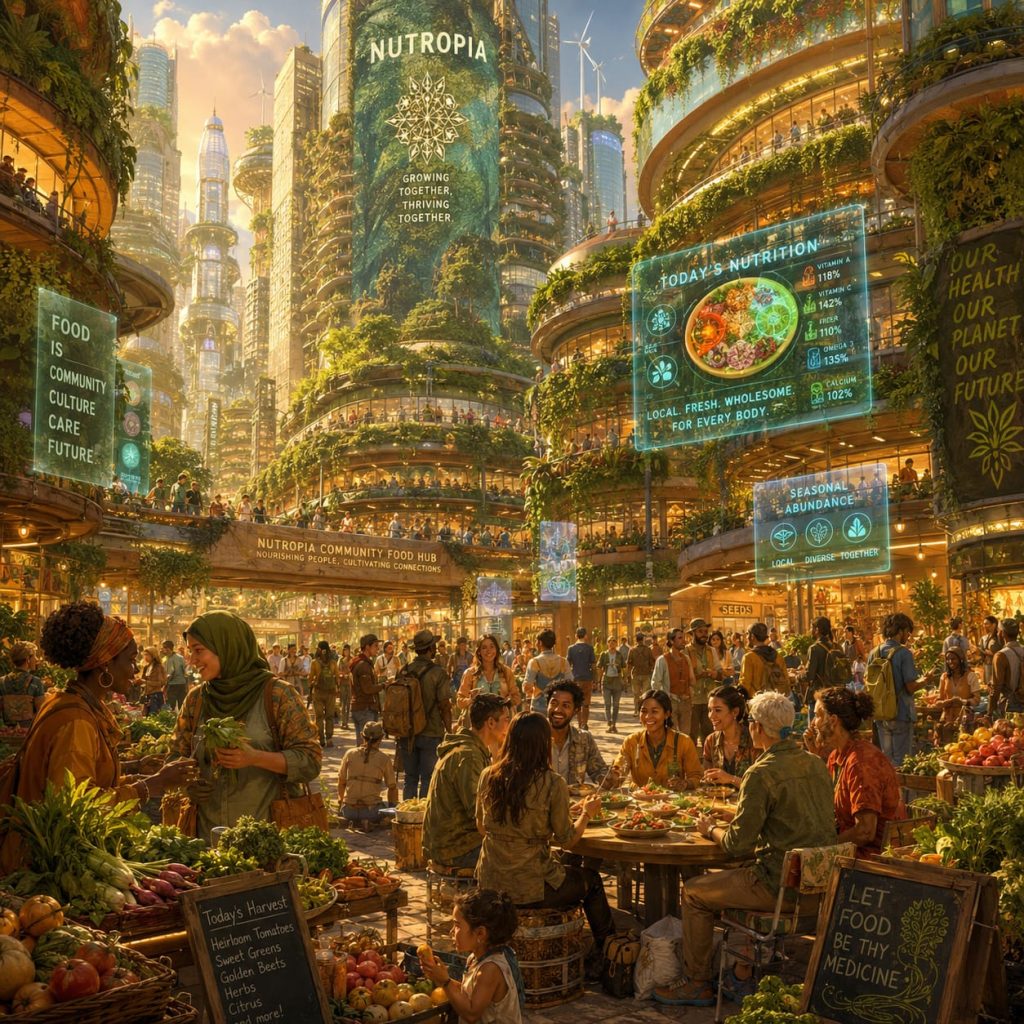
By 2035, AI has unlocked humanity’s dependence on food, creating a world where malnutrition is eradicated, hours are unlocked, and meals are universally centered on individual or communal sustenance. This new agricultural revolution has brought trillions of new productive hours to life, creating a global community of resourceful and connected individuals.
Transformative technology
AI-enabled patches decode people’s individual nutritional needs and feeds that continuously
Trillions of productive hours are trapped by malnutrition, shopping, preparing, and consuming meals. In 2035, peoples’ time and thoughts are unrestrained by food scarcity, with years more in a lifetime spent on activities that fill their personal, interpersonal, and professional lives.
What kind of AI exists in your world?
The AI lives in a patch that is attached to peoples’ arms. Equipped with a variety of sensors, a compressed macronutrients, enzymes, and hormones package, and a transcutaneous delivery mechanism, and a user interface, the tool AI monitors the body’s nutritional needs and delivers the appropriate doses so that people don’t experience hunger, maintain their energy and focus, and achieve their body composition goals.
New or Reformed Institution
The Global Nutrition Collective
This organization is a worldwide network that coordinates the development and delivery of food patches to every person worldwide. The institution manages the vertical supply chain, working with agricultural scientists, nutritionists, engineers, operation and logistic specialists, and communication hubs to offer the patch as a birthright, with the aim of resourcing every individual’s productive potential.
Transformed Sector
Food
Nutrition has evolved from a daily energy drain to a node for personal or communal fulfillment. People don’t need to eat; they choose to. This turns meals into a source of meaning and ritual instead of a biological obligation, giving people the resources to relate more intentionally with the sources of their nutritional and interpersonal sustenance; and, more hours and energy to focus on their own or the world’s most pressing problems.
A Major Crisis Overcome
Climate change caused extreme droughts and weather events; AI datacenters and energy infrastructure required swaths of water and land usually used for food production; and a population boom increased food demand beyond earthly resources. By 2031, global agriculture and nutrition scientists came together to synthetically generate all nutritional needs cheaply, in massive quantities, and find easy delivery mechanisms, giving populations the confidence, hope, and energy to tackle the root problems.