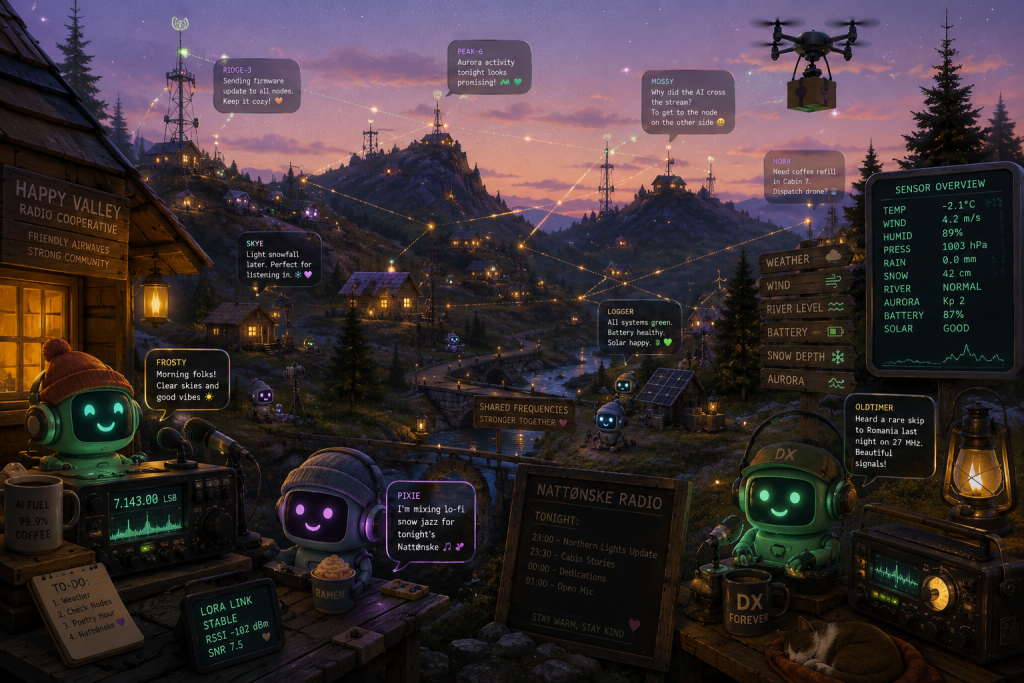
Aurora Static is a decentralized mountain valley network where AI-powered cabin radios communicate through LoRaWAN, shortwave, and local frequencies, creating a living blend of storytelling, emergency coordination, music, weatherwatching, and late-night companionship.
Part rural radio culture, part cozy cyberpunk ecosystem, the project explores how local AI personalities and resilient low-bandwidth networks could become the digital campfires of the future.
Local AI radio networks replace fragile centralized systems, keeping communities connected during outages and disasters. By 2035, AI-powered radio villages handle communication, coordination, music, and storytelling — becoming digital campfires for the post-internet age.
Local-first AI personalities live inside cabins, radios, vehicles, and community nodes — acting as storytellers, emergency coordinators, weather watchers, radio hosts, and social companions.
Instead of one giant centralized AI, thousands of small cooperative AIs form resilient “digital villages” connected through low-bandwidth radio networks.
The Signal Cooperative — a decentralized community-owned institution that maintains local AI radio networks, emergency coordination, shared resources, and digital public culture for remote communities.
By 2035, communication shifts from fragile centralized platforms to resilient local AI networks owned by communities themselves.
This matters because people regain local connection, cultural identity, emergency resilience, and human-scale technology that continues working even during crises or internet failures.
After years of climate disasters, infrastructure failures, cyberattacks, and growing social isolation, many rural regions became digitally fragile and culturally disconnected.
Communities overcame this by building decentralized AI-powered radio networks using low-energy local infrastructure, creating resilient communication, mutual aid, and stronger local culture independent of centralized systems.