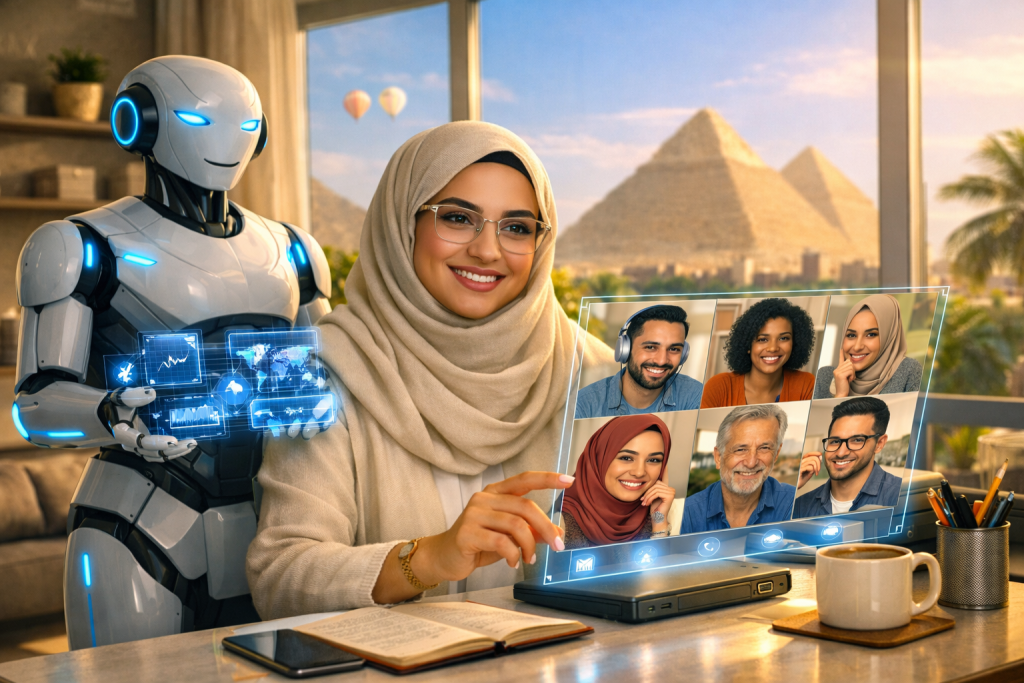
In 2035, AI knowledge flows freely across every border, empowering people from the Global Majority not only to access learning but to actively shape the future of AI development, deployment, and governance. Physical companion robots serve as trusted AI partners – explaining concepts, providing unlimited access to references, and bridging language barriers in real time. This transformation unlocks creativity and delivers genuine opportunities for millions left behind – one mind at a time.
Transformative technology
Companion Robotics: Open-Source AI Partners for Knowledge Access and Global Inclusion
It solves access to knowledge and study opportunities. In 2035, a researcher wakes to finished mock experiments & organized next steps. While on remote calls, it provides real-time translations and assists with live demos – enabling true participation. No visa. No relocation. Just pure learning.
What kind of AI exists in your world?
This is Tool AI under direct human control. It acts only when instructed, with strong safety protocols and built-in ethical guardrails that preserve human agency and prevent harm. Development began with major AI companies, but open-source initiatives gradually democratized access. By 2035, everyday people can fine-tune their robots for specific cultural contexts and regional needs. No single company controls the technology. Knowledge belongs to everyone – and so does the future it builds.
New or Reformed Institution
Global AI Equity Council : An international governing body with mandatory representation from all regions, including voices from the Global Majority. Its purpose is to prevent gatekeeping of AI knowledge and learning tools – enforcing open robotics blueprints, transparent training data standards, and regular audits of AI companies to ensure inclusive development practices worldwide. Decisions require consensus across regions, ensuring no single nation or corporation can ever dominate the agenda.
Transformed Sector
Education & Work
Education and work are borderless. Personalized robots adapt learning to local realities, enabling students and researchers to access top courses from anywhere. Remote fellowships and apprenticeships are now the norm. Brilliant minds from the Global Majority thrive without leaving their communities – preserving cultural roots while gaining global reach. Job displacement turns into human-AI collaboration, producing innovation that reflects the full diversity of human experience and imagination.
A Major Crisis Overcome
Pre-2030s: advances in AI widened global inequality – concentrating knowledge & opportunities in a few tech hubs. This sparked a powerful ‘Advocacy for Inclusion’. 2030: determined voices from underrepresented countries raised awareness about exclusionary practices in the field. 2033: the movement grew into coordinated campaigns pushing for systemic change. 2035: AI companies embraced remote-first policies & diverse hiring, transforming exclusion into participation, prosperity, and progress.