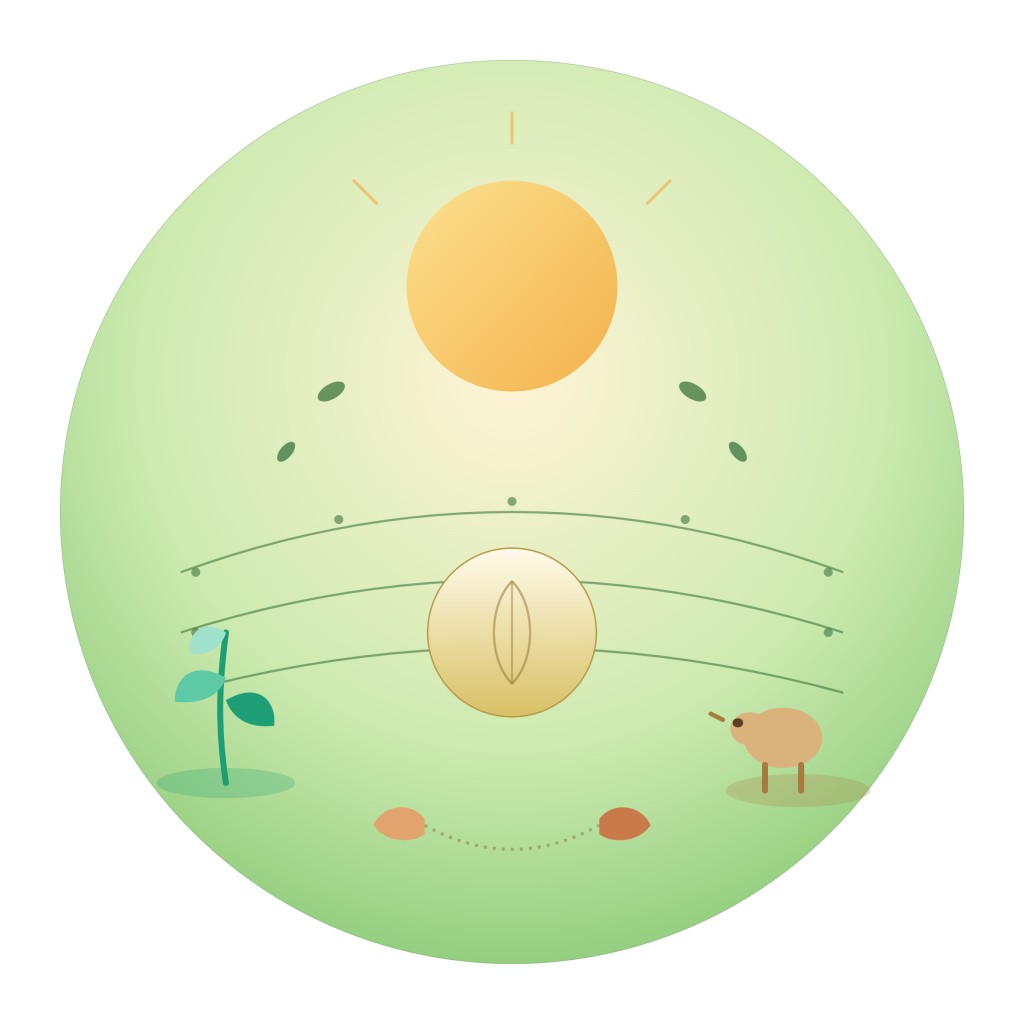
I’m describing a 2035 where AI-driven tools have made advanced agricultural knowledge accessible to everyone, regardless of wealth or background — turning farming from an industrial specialty into something everyone participates in. It’s hopeful because the change isn’t really about the technology itself, but about what it removes: the gap between who gets to feed the world and who has to depend on it.
Transformative technology
AI-powered soil and crop sensors paired with predictive analytics
It closes the information gap between industrial and smallholder farming—precision data once reserved for big agribusiness becomes universal. By 2035, fewer crop losses, less guesswork, and a rural farmer making decisions on par with a corporate operation.
What kind of AI exists in your world?
Narrow, specialized AI woven into agricultural infrastructure—soil sensors, weather prediction, crop genetics modeling, livestock health monitoring. Each system does one job well rather than acting as a single general intelligence. It acts as a guide but the farmer still makes the final call. It’s less an autonomous agent with its own goals, more a deeply informed extension of human judgment, expanding what any one person can know and decide rather than replacing their decision-making entirely.
New or Reformed Institution
A Global Agricultural Data Commons—a reformed, decentralized version of today’s siloed agribusiness and research institutions. Instead of soil data, crop genetics, and climate models being locked behind corporate or national walls, this institution treats agricultural knowledge as shared infrastructure, like weather forecasting. It’s governed jointly by farmer cooperatives, research bodies, and local governments rather than a single corporate or state actor, ensuring the AI tools built serves.
Transformed Sector
AGRICULTURE
By 2035, agriculture shifts from an industrial specialty gated by capital and corporate data to a universally accessible practice, supported by shared AI infrastructure rather than proprietary systems. This matters because it narrows the gap between who has access to precision knowledge and who doesn’t—smallholders make decisions once reserved for agribusiness. The result isn’t just higher yields, but a redistribution of agency: more people, across class and geography, will participate .
A Major Crisis Overcome
Agriculture faced an information and resource divide: industrial farms had precision data, research, and capital, while smallholders relied on guesswork and tradition, leaving them vulnerable to climate shocks and crop failure. The world overcame this by treating agricultural data as shared infrastructure—a global commons—rather than proprietary property, letting AI tools built on that commons reach any farmer, regardless of size or wealth.