Skip to content
  • About
  • Podcast
  • Engage
    • Meme Prize
    • Worldbuilding Course
    • AI Pathways
    • Hyper-Entities
  • About
  • Podcast
  • Engage
    • Meme Prize
    • Worldbuilding Course
    • AI Pathways
    • Hyper-Entities
  • Worldbuilding course
  • Guest lectures
  • Toolbox
  • World gallery
  • World submission
  • Worldbuilding course
  • Guest lectures
  • Toolbox
  • World gallery
  • World submission
  • About
  • Podcast
  • Engage
    • Meme Prize
    • Worldbuilding Course
    • AI Pathways
    • Hyper-Entities
  • About
  • Podcast
  • Engage
    • Meme Prize
    • Worldbuilding Course
    • AI Pathways
    • Hyper-Entities
  • Worldbuilding course
  • Guest lectures
  • Toolbox
  • World gallery
  • World submission
  • Worldbuilding course
  • Guest lectures
  • Toolbox
  • World gallery
  • World submission
X-twitter Bookmark

Every Body

Creator Information

Name:

Dylan Roberts

Role:

Curious ape-man

Social Media/Website:

Visit

World Summary

Vision

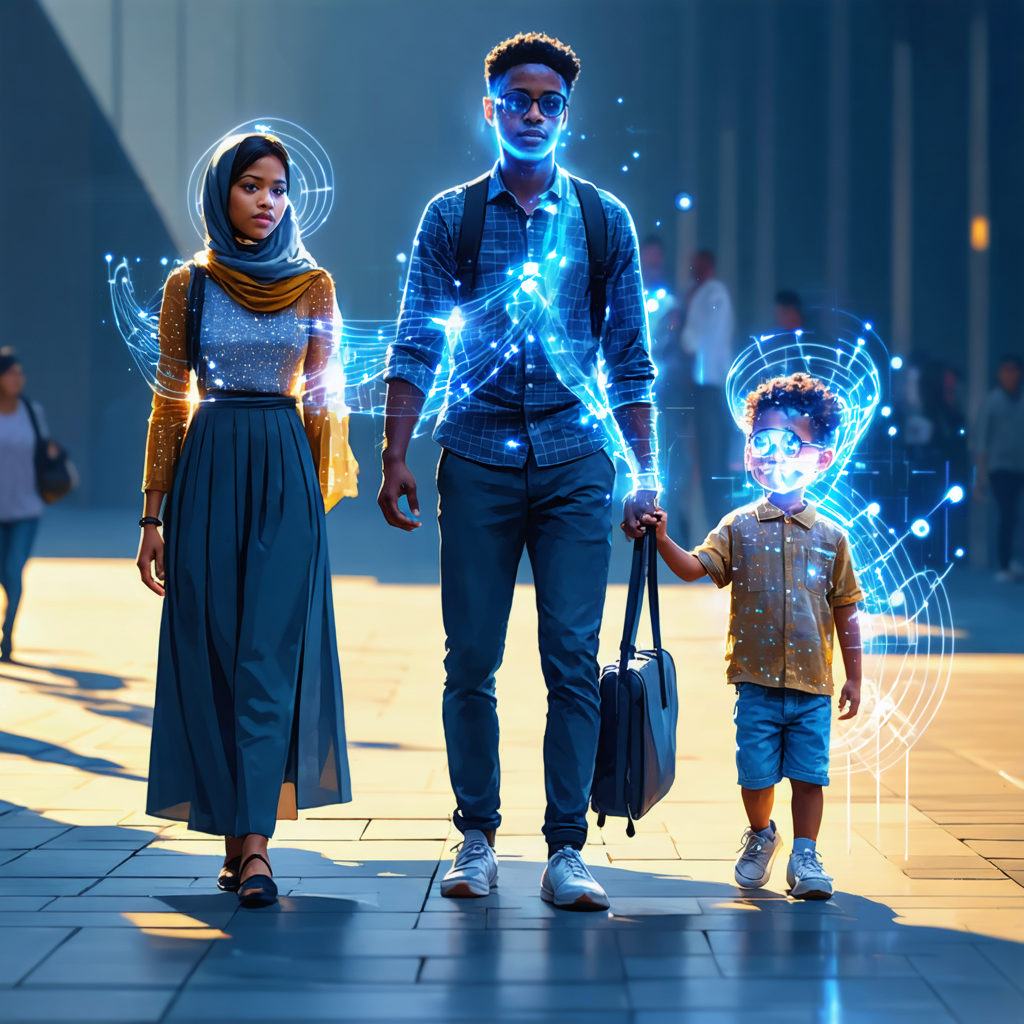
By 2035, AI sense-bridges translate the world across senses in real time — sight to sound, sound to touch — so a blind engineer, a Deaf teacher, and an autistic researcher participate fully in a world that stopped being built for one default body. Access stopped being a favour and became a property of the world itself.

Transformative technology

The sense-bridge — real-time cross-sensory translation AI

Converts any sensory stream into one the user can actually use. Round-trip latency under 5ms — below the threshold where the brain registers delay as translation. Unit cost under $200. Tools built to restore senses turned out to add ones no human was born with.

What kind of AI exists in your world?

The AI is governed and bounded tool AI. It’s a translator, meant to convert sensory, without curating or overriding perception. The user owns their sensory mapping, so that their profile is portable, inspectable, and exportable. The technology is built by open-source labs and disabled-led cooperatives, with the cardinal rule that the AI adapts to the user without choosing what the user should perceive.

New or Reformed Institution

The Universal Access Standard (UAS) is a governing body and legal standard co-designed by disabled people (majority-disabled drafting assemblies by charter). Mandates machine-readable sensory streams for all public infrastructure so that everyone can participate. They also certify new devices to keep them user-owned and ad-free, conduct company audits, and revokes certification for lock-in or surveillance. They offer subsidized access on a sliding scale.

Transformed Sector

Accessibility
Before these aids, accessibility was a compliance checklist. Buildings and public spaces were retrofitted, built late, and built cheap. Blind and Deaf adults faced employment rates half those of peers.
Since sense-bridges became possible, access became a property of the environment. While public infrastructure has begun publishing sensory streams by standard, a sense-bridge translates most of what already exists on the fly. Employment gaps closed to near parity in UAS-adopting regions.

A Major Crisis Overcome

The 2032 Privacy Reckoning: sensory bridges become possible since 2029, and companies sold them en masse to the disabled. Then, a major cyberbreach sent shockwaves through every user, scrambling, overloading, and sometimes subtely altering their senses. When the breach was uncovered, disabled-led movements built the demanded the rule: the UAS’s body-first design, passed as the first intersection of human rights, consumer protection, and data protection law.


A project by the Foresight Institute

Copyright © 2026. All rights reserved.

ABOUT

Contact & Press

Library

Archive

Privacy Policy

Youtube Spotify Podcast X-twitter