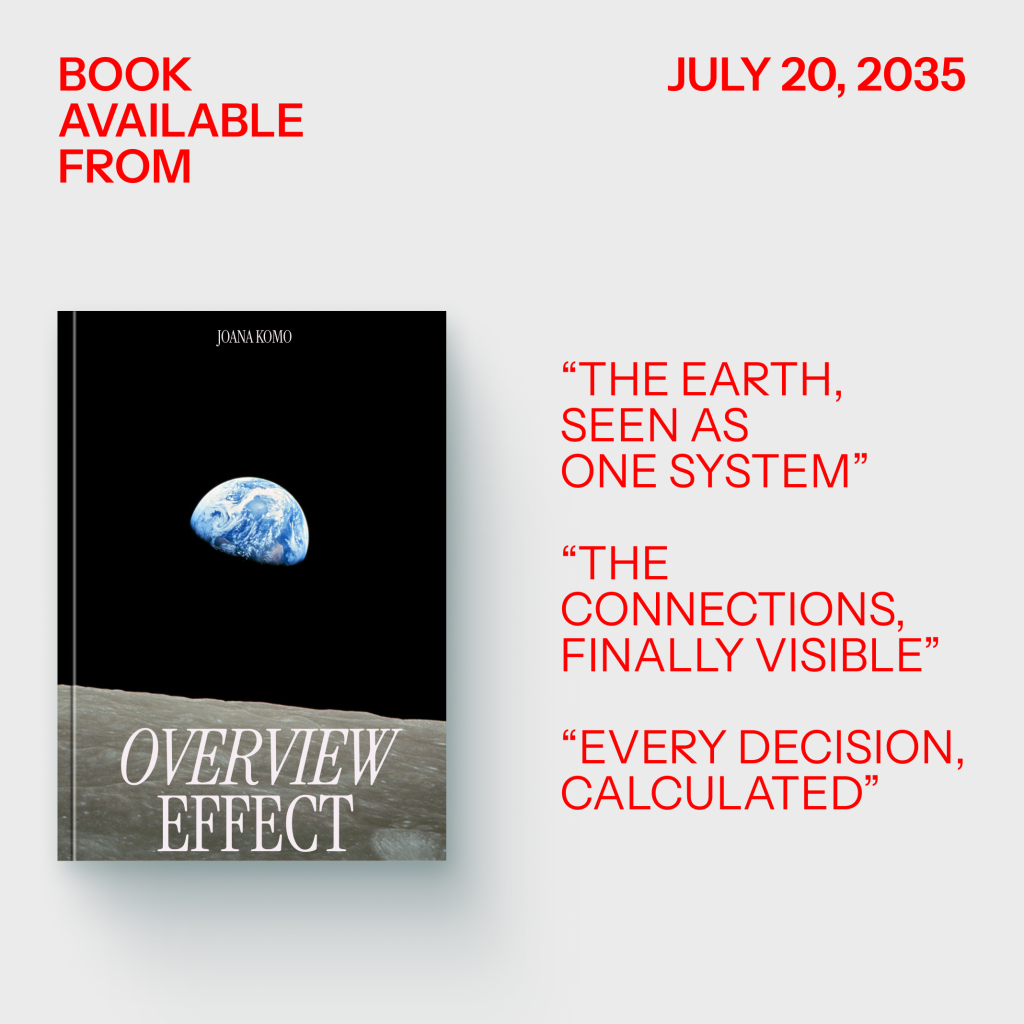
By 2035, AI learned to calculate the true cost of every decision: ecological, social, long-term. Widespread space travel gave leaders the Overview Effect, the felt sense of Earth as one connected system. Longer lifespans meant they’d live with the consequences of short-term thinking. Together, these forces exposed how the system was built to hide cascading costs. Companies shifted toward real stewardship because exploitation became impossible to hide and irrational to continue.
Transformative technology
Quantum computing powering AI as a systemic calculator and space travels
Solves a calculation failure, not just a perception failure. Systemic interconnection, how everything cascades, had no language in capitalism’s KPI-driven metrics. Quantum-powered AI maps externalities as real numbers, stress-tests scenarios, and reveals true system costs.
What kind of AI exists in your world?
Tool AI: powerful but under human direction. It was developed primarily by corporations, but a critical shift occurred when a new generation of leaders, shaped by the Overview Effect and advances in health and longevity, began demanding AI that revealed systemic consequences rather than optimized short-term extraction. Governments lagged behind; coalitions of transformed corporate leaders, scientists, and civil society created the standards that shaped how this Tool AI was built and deployed.
New or Reformed Institution
The Systemic Impact Standard (SIS): a reporting framework, initially adopted voluntarily by stewardship-oriented corporations and later codified into law, requiring companies to disclose the true ecological and social cost of their decisions alongside financial earnings. It emerged from corporate practice, then became the baseline expectation across industries and governments by 2035.
Transformed Sector
Economics
AI learned to price what markets had always ignored: ecosystem services, sustainability, social stability, long-term cost, turning “externalities” into real, measurable line items. This didn’t happen through new taxes, but through corporations voluntarily adopting price mechanisms that reflected true cost. Once exploitation showed up as a number on a balance sheet, it became impossible to rationalize away.
A Major Crisis Overcome
When AI began surfacing systemic truths, large corporations responded with denial, trying to alter the calculations. These institutions collapsed, but they were global infrastructure: transport, energy. When they failed simultaneously, interdependence became undeniable. Unrest erupted on a destabilized planet. Recovery came through results, not regulation: companies that acted on AI’s calculations outperformed those that dismissed them. Empirical proof succeeded where argument had failed.