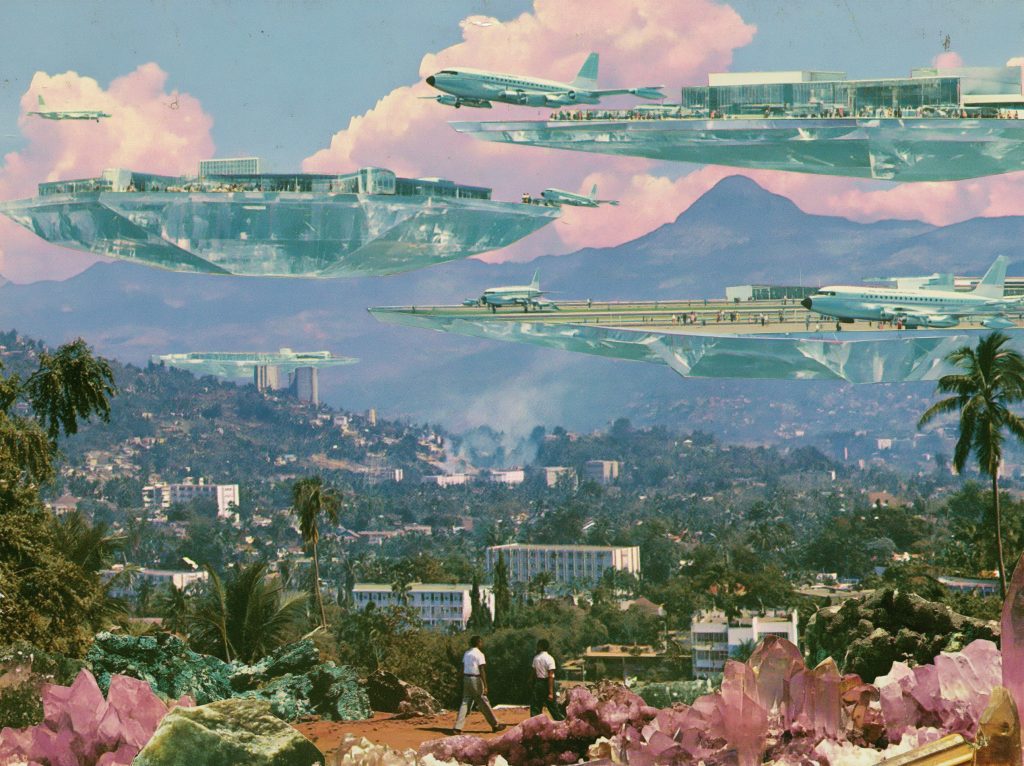
By 2035, humanity has embraced beauty as public infrastructure. The Crystal Republic is a society where advanced AI, sustainable materials, and community-centered design transform transportation, architecture, and civic life into experiences that inspire collective joy rather than simply maximizing efficiency.
Lightweight crystalline composite materials allow aircraft, public buildings, and transportation hubs to float, self-repair, harvest solar energy, and dramatically reduce resource consumption, making travel cleaner, quieter, and accessible to everyone.

The Crystal Republic relies primarily on tool AI. AI acts as a creative and engineering partner, helping communities design cities, transportation systems, public art, and ecological infrastructure while remaining accountable to human oversight. The underlying models are publicly governed and collaboratively developed by artists, engineers, scientists, and local communities rather than controlled by a handful of corporations.
The Ministry of Collective Imagination
Rather than treating art as decoration, this public institution funds artists, architects, engineers, and technologists to design beautiful civic infrastructure together. Every major transportation project, housing development, and public space must include artists as equal collaborators, ensuring that beauty, culture, accessibility, and sustainability are considered essential public services.
Transportation becomes one of society’s greatest public gathering spaces rather than something merely functional. Floating crystalline airports operate on renewable energy, produce minimal environmental impact, and double as botanical gardens, cultural centers, and public parks. Travel becomes slower in spirit (even if faster technologically) encouraging community, celebration, and human connection instead of stress.
The climate crisis and decades of extractive development forced humanity to rethink what progress meant. Rather than endlessly consuming natural resources, new crystalline materials, AI-assisted design, and circular manufacturing dramatically reduced environmental impact. The greatest transformation, however, was cultural: societies stopped measuring success only through economic growth and began valuing beauty, public well-being, and shared imagination as forms of infrastructure.