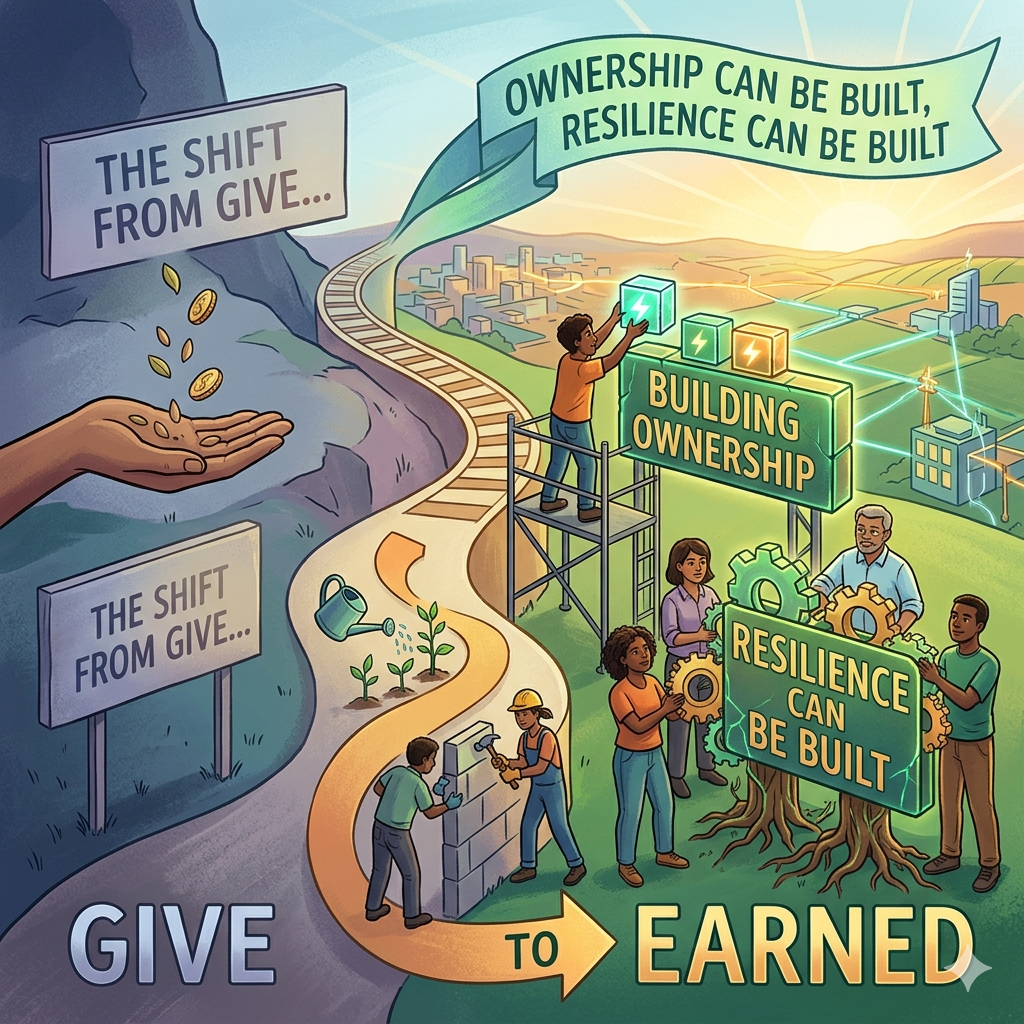
By 2035, Sahel villages turn sun and seawater into food security. Smart microgrids and consensus-led Irrigation Circles replace aid dependency with village control over water, energy, and seeds- proving resilience can be built, not delivered.
Transformative technology
Smart solar-desalination microgrids
Solar-desalination microgrids turns sun + brackish water into farm irrigation. They serve drought-hit Sahel villages where rain fails. By 2035, they’re village-owned rings of panels around crops, not diesel pumps. Data screens let farmers govern water flow themselves.
What kind of AI exists in your world?
AI here is a Tool, not a decider. Soil-moisture and weather models were first built by outside engineers, for the community. By 2035, young people trained on the platform maintain and improve the code themselves, Ownership shifted from given to earned. Irrigation Circles still make final water and crop decisions, by consensus- the AI advises, it doesn’t rule.
New or Reformed Institution
The Sahel water commons- a federation of village Irrigation Circles- holds shared title to microgrid data and AI models. It sets fair-use rules for water, mediates cross-village disputes, and blocks any single buyer, corporate or government, from controlling supply. Power stays as distributed as the water it tracks.
Transformed Sector
Food.
Solar-desalination microgrids turn barren Sahel plots into year-round farms. Drought no longer means famine. Irrigation Circles set crop plans by consensus, prioritizing millet and vegetables over cash crops. Surplus is traded locally, not exported. AI predicts soil moisture, so no water is wasted. By 2035, food security means village control of sun, water, and seeds- not aid trucks, not corporate contracts. Just mutual harvests.
A Major Crisis Overcome
The 2028 drought emptied granaries and tempted villages to lease land to foreign agribusiness for quick cash. Irrigation Circles refused, pooling solar-desalination units instead. Three dry seasons later, shared water held- proof that cooperation outlasted any single contract.