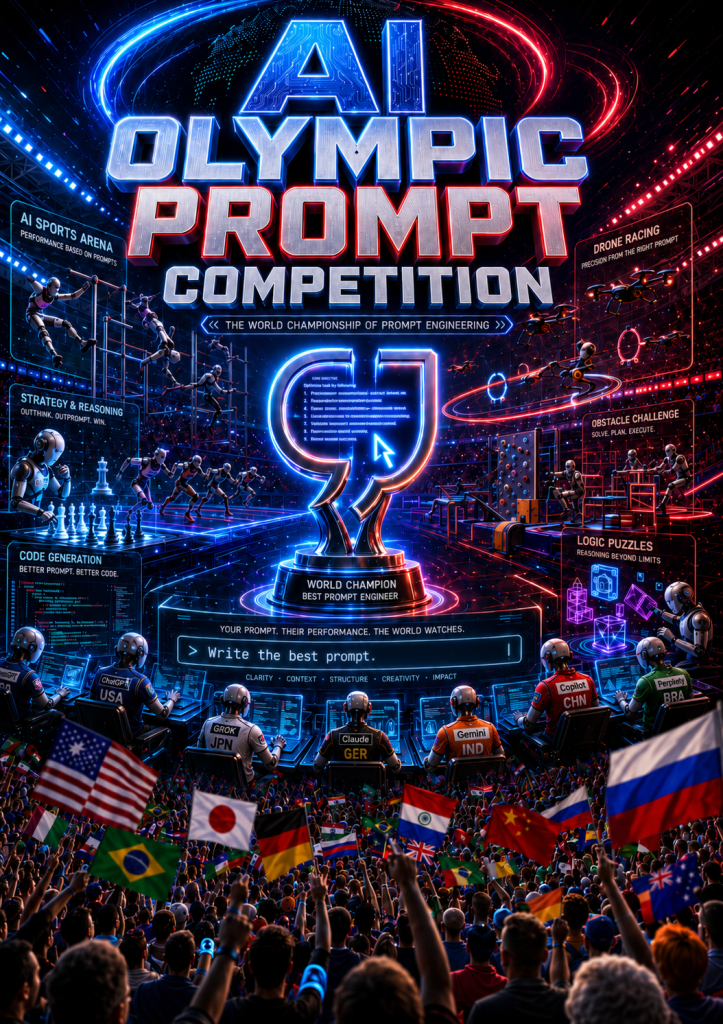
By 2035, prompting has become a new form of universal literacy: people compete in their ability to guide AI systems with greater precision, ethical awareness, and creativity toward solving complex tasks. This world is hopeful because AI does not replace human intention; it amplifies it, transforming knowledge, imagination, and clear communication into the foundation of global progress.
Transformative technology
Advanced AI assistants for prompting and complex problem-solving.
Advanced AI assistants reduce unequal access to knowledge and complex tools. By 2035, people use them to learn, work, design, and solve problems, while strong prompting becomes a core skill for creating value.
What kind of AI exists in your world?
In Promptopia 2035, AI exists mainly as Tool AI. AI systems perform complex tasks in sports, coding, design, strategy, and problem-solving, but humans guide them through precise and responsible prompts. Universities, public institutions, and technology companies build these systems under rules for transparency, safety, and human oversight.
New or Reformed Institution
Global Prompting Council — an international institution that sets standards for responsible prompting, certifies competitions, and ensures transparent evaluation of AI-generated results. Its purpose is to keep AI under human guidance and promote learning, creativity, and problem-solving.
Transformed Sector
Education, Work, and Innovation
By 2035, education, work, and innovation have shifted from memorizing information toward designing better questions, prompts, and problem-solving strategies. People learn how to guide AI systems ethically and creatively, while workplaces value human judgment, clarity, collaboration, and imagination. This transformation matters because it expands access to knowledge, reduces skill barriers, and enables more people to participate in solving complex social, scientific, and economic challenges.
A Major Crisis Overcome
By the late 2020s, the world faced a crisis of unequal AI access, misinformation, and declining trust in automated systems. Promptopia 2035 overcame this by treating prompting as a public skill: schools, workplaces, and civic institutions taught people how to use AI critically, ethically, and creatively. Transparent standards and global competitions helped turn AI from a source of fear into a tool for shared learning, innovation, and problem-solving.