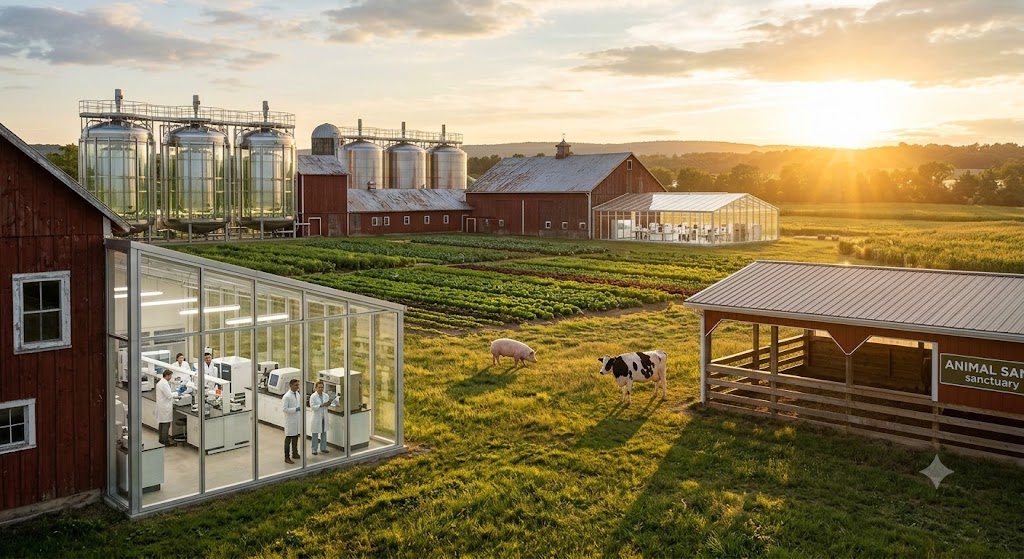
The humans of 2035 are redefining their relationships with other animals. In the U.S., lab-grown meat has reached price parity with conventional animal products, driven by a decade of biotech investment and a viral moment: a Super Bowl LXIV commercial that used biosignal AI to broadcast the true emotions of ‘humanely raised’ animals to 113 million Americans. The food system is rapidly evolving and for the first time in U.S. history, interspecies ethics has entered mainstream political discourse.
Transformative technology
Biosignal AI
Human understanding of animal suffering was always open to interpretation — until advanced biosignal AI systems made it objective. In 2035, a farm can’t market its animals as ‘happy’ or ‘healthy’ when a biosensor proves otherwise. Interspecies communication closed an empathy gap that Big Ag created.
What kind of AI exists in your world?
In 2035, multimodal AI models translate animal biosignals into familiar emotional states like comfort, distress, fear, and happiness. Originally developed for veterinary clinics and interspecies communication research, a cultivated meat company collaborated with activists to secretly deploy biosignal AI systems in humane-certified farms. The data collected by the systems exposed Big Ag’s humanewashing and marked the start of a major paradigm shift in public attitudes toward farmed species.
New or Reformed Institution
The Fair Food Administration (FFA), established in the passage of the Fair Food System Transition Act of 2033, seeks to: (1) Support farmers in diverting operations to crops used in meat cultivation, (2) Fund sanctuary expansion projects to create capacity for animals from closing farms, and (3) Fund research into farmed animal sentience and long-term psychological impacts of industrial confinement — findings that now carry direct policy implications for a contracting animal agriculture sector.
Transformed Sector
Animal Agriculture
By 2035, there are around 2 billion farmed animals in the U.S., a drastic reduction from over 10 billion just a decade prior. Mass slaughterhouse closures in the past five years have pushed livestock farmers towards crop production. After the passage of the Fair Food System Transition Act, thousands of farmers received FFA grants to make a full transition to ingredient supply for meat cultivation. Politicians now face pressure to enact similar transition plans for other displaced workers.
A Major Crisis Overcome
For decades, Big Ag backed politicians ensured the success of factory farms, despite Americans’ growing concerns about climate change and animal welfare. Subsidies kept animal product prices artificially low, lobbying stalled regulatory reform, and humanewashing campaigns distracted the public from the moral case against industrial animal agriculture. The rapidly growing demand for lab-grown meats threatened Big Ag but AI-driven interspecies communication systems that ultimately dismantled it.