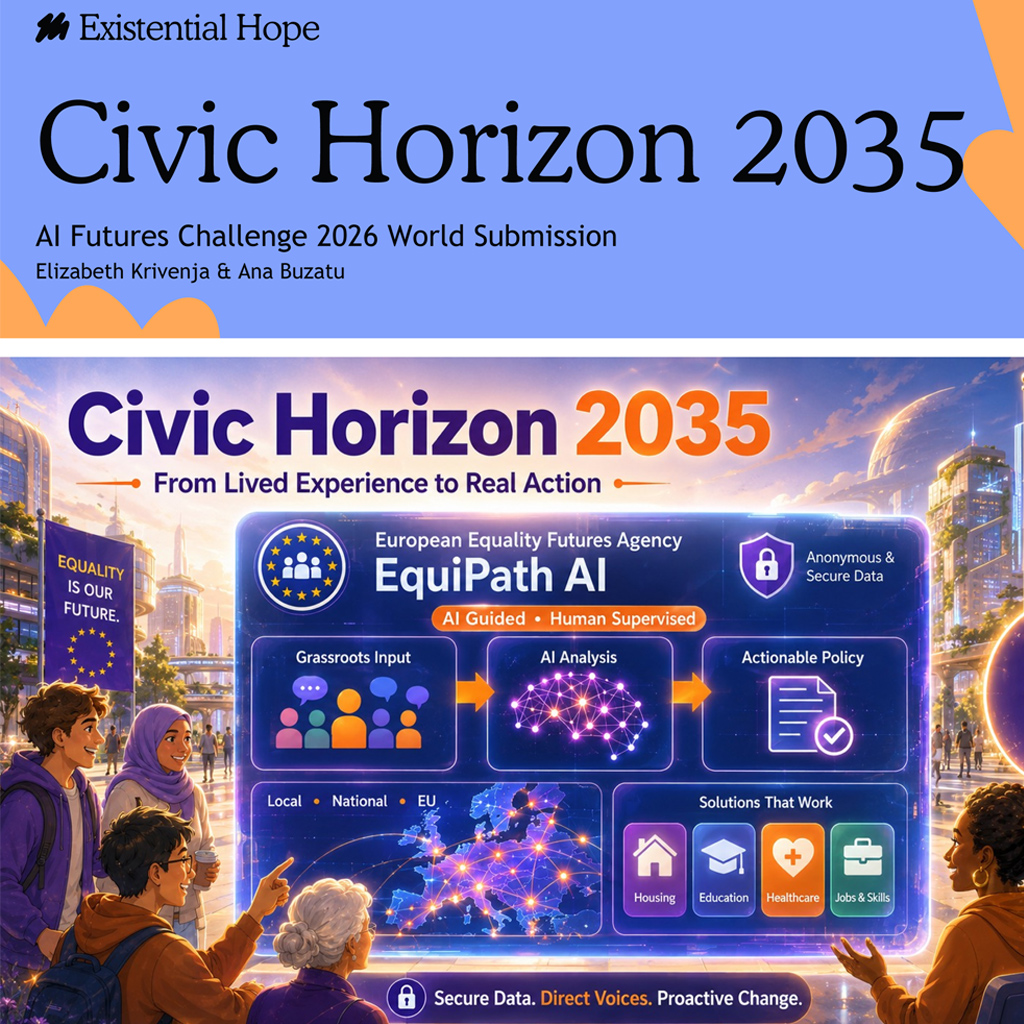
By 2035, Europe has committed to the complete elimination of inequality by transforming democracy into a more participatory, transparent, and proactive system. Through secure, human-controlled AI, governments can directly hear from affected groups and minorities, understand their lived experiences, and create targeted legislation that anticipates problems before they escalate — replacing one-size-fits-all policies with solutions shaped by the people most impacted.

EquiPath AI is a secure tool that uses anonymised community input and policy data to identify inequality gaps, forecast risks, and help governments create localised, proactive solutions shaped by affected groups.
The AI in this world is Tool AI, not autonomous AI. It does not govern, replace politicians, or make final decisions. Instead, EquiPath AI supports human decision-making by analysing complex data, identifying patterns, and suggesting possible paths toward equality. It is always under human supervision, with oversight from experts, civil society, and affected communities.
The European Equality Futures Agency is a new EU-level institution focused on eliminating inequality. It oversees EquiPath AI, protects anonymised community data, and ensures affected groups are directly heard. Its purpose is to move equality policy from reactive crisis response to proactive long-term change, while requiring governments to respond publicly to its recommendations.
The transformed sector is public policy and democratic governance. Policymaking becomes more community-led, transparent, and evidence-based. Instead of relying on broad top-down laws, governments use direct input from affected groups and AI-supported analysis to design targeted policies, review outcomes, and adapt solutions over time so legislation reflects lived reality.
A major crisis is low initial trust and participation from affected groups. Some communities may feel sceptical, tired, or apathetic because institutions have failed them before. This is overcome through anonymised data, transparency, community partnerships, and early tangible results that show participation can lead to real change and gradually build legitimacy.